New DesertX

Author
João Pereira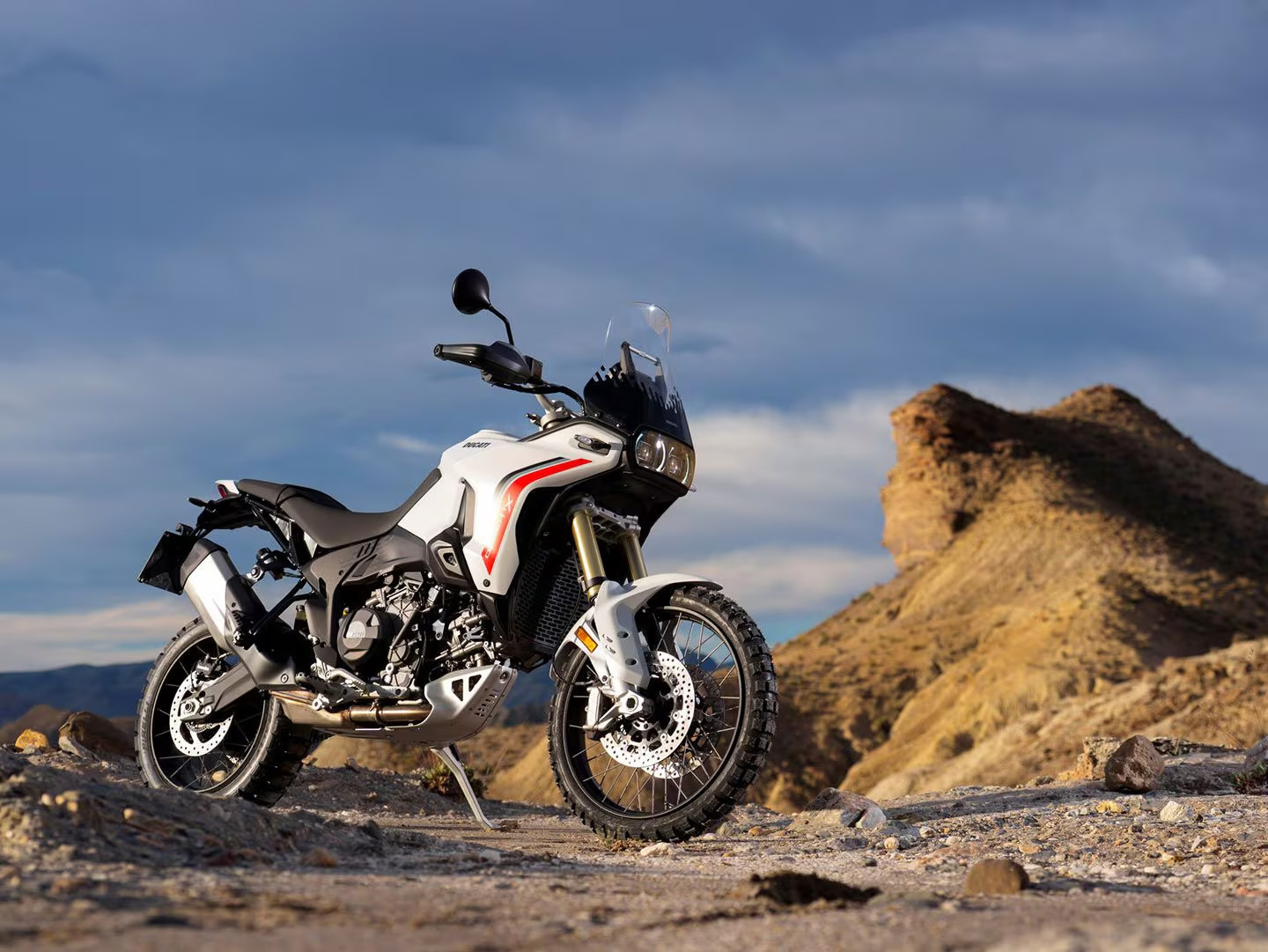
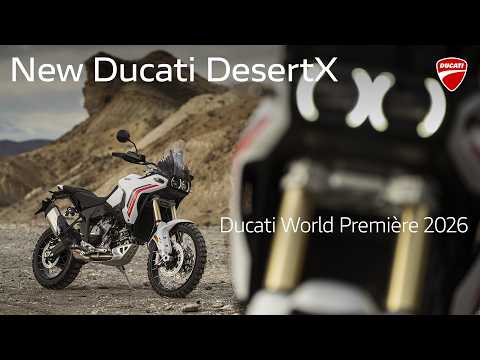
Since that EICMA prototype already gave us a look at the main technical updates to expect, let’s start with the big surprise of the 2026 bike’s full unveiling: the price. With an MSRP of $16,995 it’s $2000 cheaper than the 2025 machine despite its all-new status, and there’s no apparent sacrifice in terms of performance or equipment. In fact, the new model is fractionally lighter and more powerful—albeit by minute amounts—and it promises to save owners even more money with reduced servicing costs over its lifespan thanks to the adoption of Ducati’s 890cc V2 engine in place of the previous 937cc Testastretta 11°
We’ve already met Ducati’s new 890cc ‘V2’ engine on several occasions: it superseded the old Testastretta 11° in the Multistrada V2, the Hypermotard V2 and the Monster, as well as replacing the 955cc Superquadro V-twin in the Panigale V2 and Streetfighter V2. Claiming to be the lightest and most compact eight-valve V-twin that the company has ever made, it’s an engine that turns its back on decades of Ducati heritage by ditching the famous desmodromic valve system, where additional cam lobes and rockers pull the valves closed, eliminating the need for valve springs, and the belt-driven camshafts of earlier motors. Instead, the cams are chain-driven and operate conventional poppet valves, closed by springs like every other manufacturer’s V-twins.
The engine isn’t the only departure from tradition, as the DesertX V2 also follows its sister models by dropping Ducati’s signature steel trellis frame for a cast aluminum monocoque, using the engine as a stressed frame section and doubling up as the airbox. As well as being more compact and more rigid, Ducati claims the redesign makes it easier to access and clean the air filter after offroad riding. The seat subframe is still a steel trellis, and again Ducati says it’s designed with an eye to easing maintenance and reducing service costs.
While the bike’s styling is clearly a development of the original’s look, with a strong nod towards 1980s and 90s Dakar rally-raid machines (the Ducati-powered Cagiva Elefant is a notable inspiration, and also the heritage that MV Agusta draws on for the Enduro Veloce, as Ducati and Cagiva/MV were under the same ownership during that period). The DesertX V2’s panels are all new, though, along with a more modern interpretation of the headlight, and the 2026 bike is slimmer than before thanks to a smaller, 4.8-gallon, plastic fuel tank instead of the previous 5.5-gallon unit. If range is a concern, there’s the option of a 2.1-gallon, rear-mounted auxiliary tank to increase the fuel load.
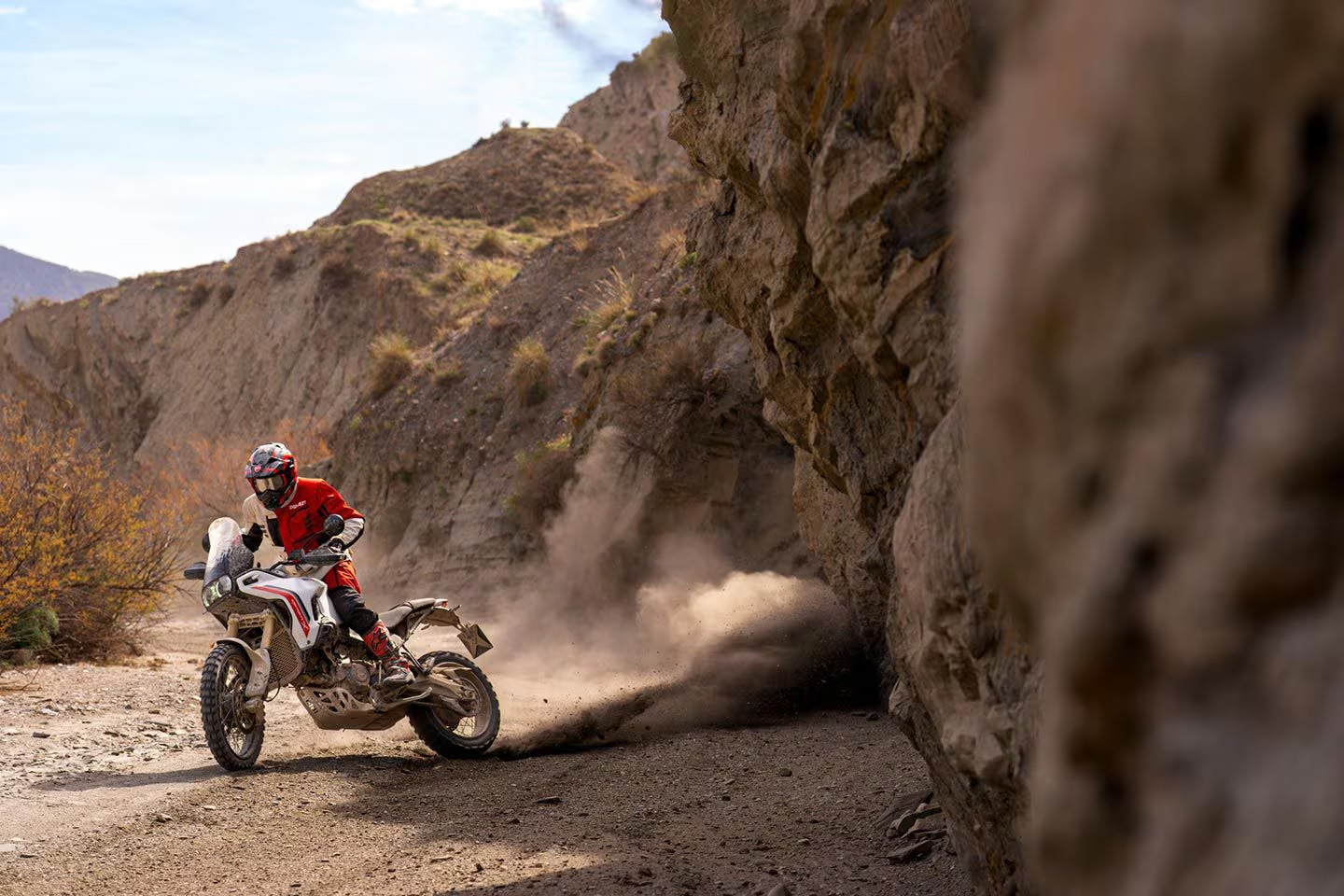
Ducati has long been at the top of the game when it comes to rider-assists and clever electronics, and the DesertX V2 is no exception. It drops the old bike’s portrait-style TFT dash for a landscape-oriented, 5-inch unit with 800 x 480-pixel resolution and three display modes, and from that you get access to no fewer than six riding modes, each customizable to suit your preferences. Those modes govern tech including IMU-assisted cornering ABS and traction control, wheelie control and engine braking control systems. The ABS also has four settings, two for off-road use and two for on-road riding, and can be disabled altogether in the offroad-oriented ‘Rally’ and ‘Enduro’ riding modes.
Deliveries in the US are expected to start in May, not long after the bike is available in Europe, and Ducati already has a broad range of accessories and options on its online configurator, including luggage and protection as well as a race exhaust, taller and shorter screens, heated grips, multimedia and navigation systems, and a variety of different seats to raise or lower the bike from its stock 34.6-inch height. You are, however, limited to just one color option: the DesertX V2 comes only in white for 2026.